
How to Distinguish Between Honey Bees, Wasps, and Bumblebees

Identifying insects like honey bees, wasps, and bumblebees can be tricky because they often share similar colours and sizes. Yet, knowing the difference is useful for safety, gardening, and understanding nature better. Each of these insects plays a unique role in the environment, and they behave differently around people. This guide will help you spot the key features that set honey bees, wasps, and bumblebees apart.

Body Shape and Size
One of the easiest ways to tell these insects apart is by looking at their body shape and size.
Honey Bees
Honey bees have a slender, streamlined body covered with fine hairs. Their bodies are about 12 to 15 millimeters long. The hairs help them collect pollen. Their abdomen has a smooth curve and is usually golden brown with black bands.
Wasps
Wasps have a more elongated and smooth body with a very narrow waist connecting the thorax and abdomen. They are generally less hairy and have shiny bodies. Wasps tend to be slightly longer than honey bees, ranging from 10 to 20 millimeters depending on the species.
Bumblebees
Bumblebees are the largest and most robust of the three. Their bodies are round and covered with dense, fuzzy hair that makes them look soft and bulky. They can be 15 to 25 millimeters long. Their coloration is often black with yellow or orange bands.
Colour Patterns
Colour can be a helpful clue but it varies among species.
Honey Bees
They have a warm golden-brown colour with black stripes on their abdomen. Their hairs are short and less noticeable.
Wasps
Wasps usually have bright yellow and black stripes that are sharply defined. Their colours appear more vivid and glossy compared to bees.
Bumblebees
Bumblebees have a fuzzy appearance with black and yellow bands. Some species also have orange or white markings. Their colours are less shiny and more muted due to their thick hair.
Behaviour and Flight Patterns
Watching how these insects move can also help you identify them.
Honey Bees
Honey bees fly steadily and purposefully from flower to flower. They are generally non-aggressive unless provoked. They collect nectar and pollen to bring back to their hive.
Wasps
Wasps have a more erratic and fast flight. They can hover and dart quickly. Wasps are predators and scavengers, often seen around food or garbage. They can be aggressive if disturbed.
Bumblebees
Bumblebees fly slower and with a loud buzzing sound. They often hover near flowers and can fly in cooler or cloudier weather when other bees are less active.
Nesting Habits
Where these insects build their nests is another key difference.
Honey Bees
Honey bees live in large colonies inside hives made of wax. They prefer hollow trees or man-made hives. Their hives have hexagonal honeycomb cells. They may move into a property within cavities etc.
Wasps
Wasps build paper-like nests from chewed wood fibres mixed with saliva. These nests can be found hanging from trees, under eaves, or inside wall cavities. Their nests often have a papery texture and are sometimes exposed.
Bumblebees
Bumblebees nest in small colonies, often underground in abandoned rodent burrows or in thick grass. Their nests are less organized and smaller than honey bee hives.
Stings and Aggression
Understanding their defensive behaviour is important for safety.
Honey Bees
Honey bees can sting only once because their stinger is barbed and gets stuck in the skin. After stinging, the bee dies. They usually sting only when threatened.
Wasps
Wasps can sting multiple times because their stinger is smooth. They are more aggressive and may sting if they feel their nest is threatened or if provoked.
Bumblebees
Bumblebees can sting but are generally less aggressive. They rarely sting unless handled roughly or trapped.
Role in the Ecosystem
Each insect contributes differently to the environment.
Honey Bees
Honey bees are vital pollinators for many crops and wild plants. They produce honey and beeswax, which humans harvest.
Wasps
Wasps help control pest populations by feeding on other insects. Some wasps also pollinate flowers, but they are less efficient than bees.
Bumblebees
Bumblebees are excellent pollinators, especially in cooler climates. Their ability to buzz-pollinate helps plants like tomatoes and blueberries.
Summary Table
Feature | Honey Bee | Wasp | Bumblebee |
Body Shape | Slender, hairy | Smooth, narrow waist | Round, very hairy |
Size | 12-15 mm | 10-20 mm | 15-25 mm |
Colou r | Golden brown with black bands | Bright yellow and black stripes | Black with yellow/orange bands |
Flight | Steady, purposeful | Fast, erratic | Slow, loud buzzing |
Nesting | Wax hives in hollow spaces | Paper nests on trees or buildings | Underground or grass nests |
Sting | One sting, barbed | Multiple stings, smooth | Rarely sting, less aggressive |
Role | Pollination, honey production | Pest control, some pollination | Pollination, buzz pollination |
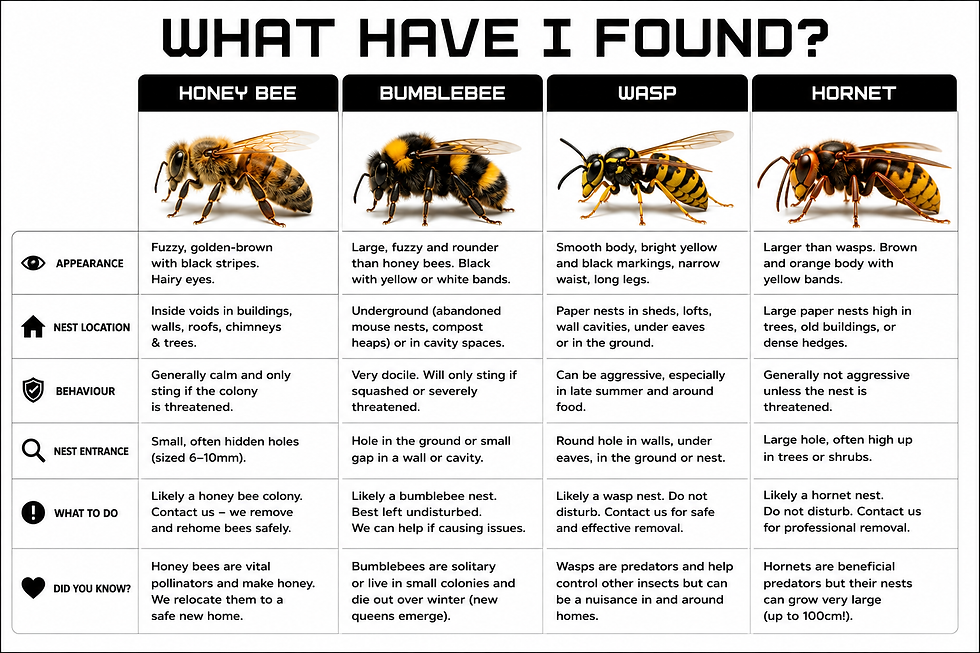
Knowing these differences helps you appreciate these insects and stay safe around them. Next time you see a buzzing insect, you can confidently tell if it is a honey bee, wasp, or bumblebee. This knowledge supports better gardening, safer outdoor activities, and respect for the important roles these insects play in nature.

Comments